
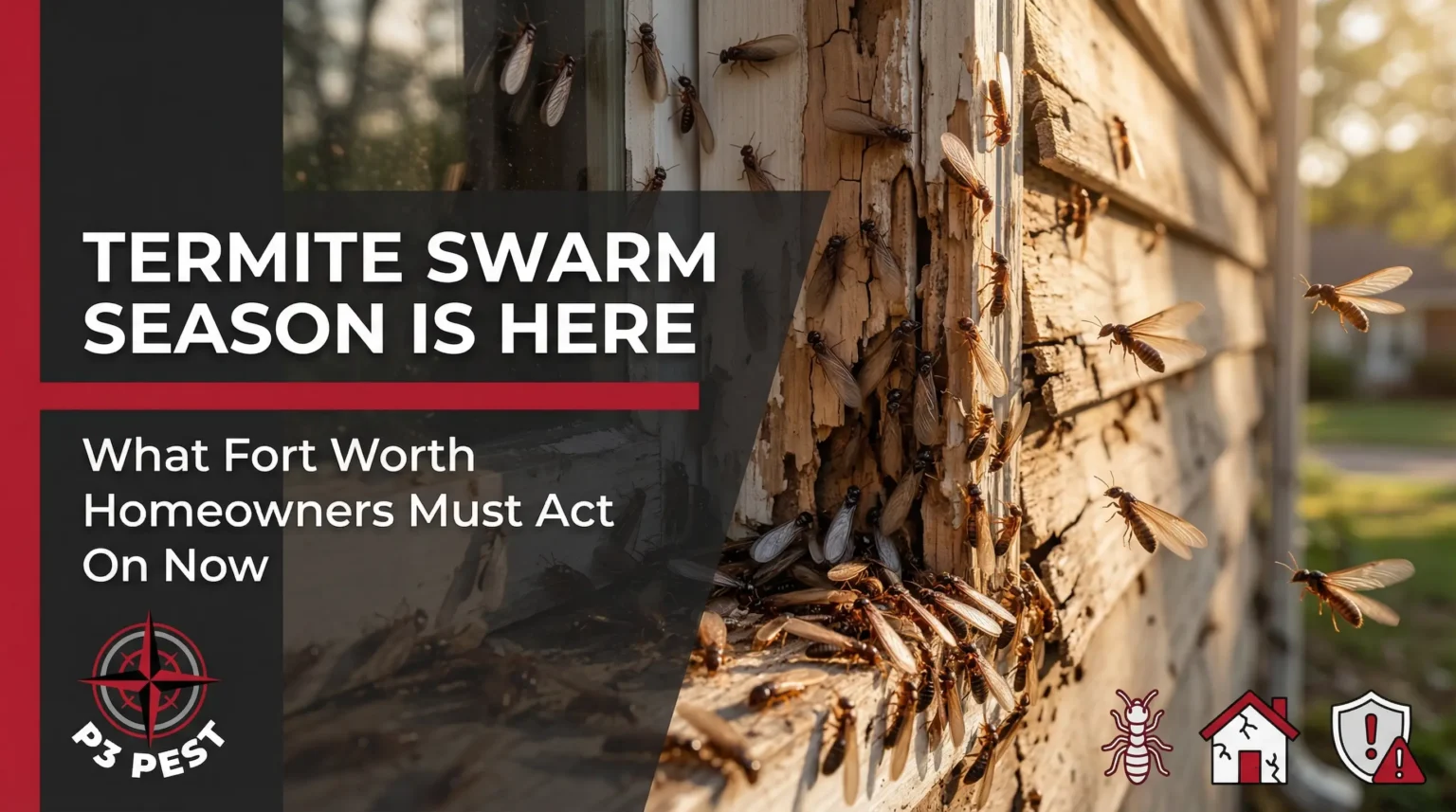
Every spring, thousands of Fort Worth homeowners discover something alarming. Small, dark, winged insects appear near windows, light fixtures, or door frames, sometimes in clusters of dozens or hundreds. Most people assume they are flying ants. Many are wrong.
These are termite swarmers. Their presence means a mature colony has been feeding on a structure long enough to produce reproductive adults. By the time swarmers appear, the colony behind them is typically three to five years old and contains tens of thousands of workers.
As we covered in our spring pest prevention guide, termites are among the first pests to activate in North Texas each year. This post goes deeper into what swarm season means for Fort Worth and Weatherford homeowners, how to identify a swarm, and exactly what to do if you find one.
What Triggers Termite Swarms in North Texas
Termite swarming is not random. Colonies release swarmers when specific environmental conditions align. Understanding these triggers helps you anticipate when your property is most at risk.
Subterranean termites, the most common species in the Fort Worth and Weatherford area, swarm when three conditions come together:
- Soil temperature rises above 70°F. In North Texas, this typically occurs between mid-March and early April. Soil warmth signals the colony that conditions are right for new colonies to survive above ground.
- A warm rain event occurs. Rain softens the soil, making it easier for swarmers to exit the colony. The moisture also improves survival rates for the new queens and kings searching for nesting sites.
- Daytime temperatures stay above 70°F for several consecutive days. Short warm spells followed by freezes delay swarming. Sustained warmth triggers it.
In most years, Fort Worth sees its first major swarms in late March or early April. However, the swarm window extends through June, and warm spikes can produce secondary swarms into early summer. According to Orkin’s regional data, Fort Worth’s termite swarm season runs from March through June.
How to Tell Termite Swarmers from Flying Ants
This is the most common mistake homeowners make. Termite swarmers and flying ants appear during the same season and look similar at first glance. Treating an ant swarm like a termite swarm wastes money. Ignoring a termite swarm because you assumed they were ants costs thousands.
Here is how to tell them apart:
- Body shape. Termite swarmers have a straight, uniform body with no visible waist. Flying ants have a pinched waist between the thorax and abdomen.
- Wings. Termite swarmers have four wings of equal length that extend well past the body. Flying ants have two large front wings and two smaller back wings.
- Antennae. Termite antennae are straight and beaded. Ant antennae are bent at an angle.
- Behavior after landing. Termite swarmers shed their wings quickly after landing. If you find piles of small, translucent wings on windowsills or near doors, that is a strong indicator of termites.
If you are not sure what you are looking at, collect a few specimens in a sealed bag or jar. A licensed pest control technician can identify the species in seconds.
Swarmers Inside vs. Outside: Why the Location Matters
Finding swarmers near your home does not automatically mean your home is infested. But it does mean a colony is close. The location of the swarm tells you how urgent the situation is.
Swarmers Found Outside
Outdoor swarms near your foundation, porch, or yard indicate a colony living in the soil nearby. This is common in North Texas, where subterranean termite colonies thrive in the clay-heavy soil throughout Parker and Tarrant counties. An outdoor swarm does not confirm that termites have entered your home, but it confirms they are within striking distance. A professional inspection is the right next step.
Swarmers Found Inside
Indoor swarms are more serious. If swarmers emerge inside your home, from a wall, window frame, baseboard, or ceiling, it means a colony is already feeding on your structure. The workers have been consuming wood from the inside out, likely for years, before producing swarmers.
Indoor swarms require immediate professional evaluation. Do not wait to see if more appear. The visible swarmers are the least of the problem. The colony behind them is where the damage is happening.
Why North Texas Homes Face Higher Termite Risk
Not all regions carry equal termite risk. The Fort Worth and Weatherford area has specific conditions that make termite colonies easier to establish and harder to detect.
Clay Soil Retains Moisture
North Texas soil is predominantly clay-based, especially in Parker and western Tarrant counties. Clay soil holds moisture longer than sandy or loamy soil. Subterranean termites need consistent moisture to survive, and clay soil provides it year-round. This means colonies can thrive even during dry stretches because the soil around your foundation stays damp.
Slab Foundations Create Hidden Entry Points
Most homes in the Fort Worth metro area are built on concrete slab foundations. Termites access these structures through expansion joints, plumbing penetrations, and cracks in the slab that are invisible from the surface. Mud tubes, the pencil-width tunnels termites build to travel between soil and wood, often form in areas homeowners never check, like behind walls, inside utility closets, or in the gap between the slab edge and exterior brick.
Formosan Termites Are Expanding Into North Texas
Formosan termites, once limited to the Gulf Coast, have been confirmed in Tarrant County and are spreading westward. These termites are significantly more aggressive than native Eastern subterranean termites. A single Formosan colony can contain several million workers, compared to a few hundred thousand for a typical subterranean colony. They consume wood faster and can cause structural damage in months rather than years.
The expansion of Formosan termites into the DFW area makes annual inspections more important than they were even five years ago.
The Warning Signs Every Fort Worth Homeowner Should Check
Termite swarmers are the most visible sign of activity, but they are not the only one. Between swarm events, watch for these indicators around your property.
- Mud tubes on foundation walls. These pencil-width tunnels run from the soil up the foundation and into the structure. Check both interior and exterior foundation walls, especially in garages, utility rooms, and crawl spaces.
- Hollow-sounding wood. Tap on baseboards, door frames, and window sills. If the wood sounds hollow or papery, termites may have consumed the interior.
- Bubbling or peeling paint. Termite activity behind walls introduces moisture that causes paint to blister or peel, resembling water damage.
- Tight-fitting doors or windows. As termites consume wood framing, they produce moisture that warps the wood. Doors and windows that suddenly stick or jam can signal termite damage behind the frame.
- Frass (droppings). Small piles of pellets that resemble sawdust or ground pepper near baseboards or on windowsills can indicate drywood termite activity. This is less common in North Texas than subterranean signs, but worth watching for.
If you notice any of these signs, do not attempt to treat the problem yourself. Over-the-counter sprays do not reach the colony and can scatter termites to new areas within your home, making professional treatment harder.
What to Do in the First 24 Hours After Finding Swarmers
Finding a termite swarm triggers panic for most homeowners. Here is a clear, step-by-step plan for the first day.
- Do not spray insecticide. Killing visible swarmers does nothing to the colony. Spraying can also contaminate areas where a professional would place bait or apply treatment.
- Collect a sample. Place a few swarmers or wings in a sealed plastic bag. This helps your pest control technician confirm the species and recommend the right treatment.
- Note the exact location. Where did the swarmers appear? A window frame, a baseboard, an interior wall, or outside near the foundation? Location determines the severity.
- Take photos. Photograph the swarm site, any mud tubes you find, and any wing piles. This documentation helps during the inspection.
- Call a licensed termite professional. Request a full property inspection, not just a spot check. A thorough termite treatment evaluation covers the interior, exterior, foundation, and surrounding soil.
The sooner you get a professional inspection, the better. Every day of delay is another day the colony continues feeding.
The Real Cost of Ignoring Termite Swarms
Termite damage is expensive, and it comes out of your pocket. Standard homeowner insurance policies in Texas do not cover termite damage. Insurers classify termite infestations as a maintenance issue, not a sudden or accidental event.
The National Pest Management Association estimates that termites cause over $5 billion in property damage across the United States each year. In Texas alone, that figure reaches an estimated $2.2 billion annually based on Texas A&M AgriLife Extension data. The average cost to repair termite damage to a single home ranges from $3,000 to $8,000, depending on how long the colony has been active and which structural elements are affected.
Compare that to the cost of an annual termite inspection and preventive treatment plan. Prevention is a fraction of what repairs cost after the damage is done.
Protect Your Home Before Swarm Season Ends
Termite swarm season in Fort Worth runs from March through June. If you have not had a termite inspection this year, now is the time. Swarmers are a warning sign, not the main threat. The real damage happens behind walls and beneath floors where you cannot see it.
Pinnacle Pest Protection offers professional termite treatment and termite pre-treatment services across Weatherford, Fort Worth, Granbury, Lake Worth, and surrounding areas. Our licensed technicians inspect your property, identify the species, locate active colonies, and apply targeted treatments that eliminate the problem at its source.
Contact Pinnacle Pest Protection today to schedule your termite evaluation before swarm season ends.
Frequently Asked Questions
When is termite swarm season in Fort Worth, TX?
Termite swarm season in Fort Worth typically runs from late March through June. The heaviest swarm activity occurs in April and May, triggered by warm rains and sustained temperatures above 70°F. Secondary swarms can occur into early summer during warm spikes.
What do termite swarmers look like?
Termite swarmers are small, dark-bodied insects about 1/4 inch long with four wings of equal length. They are often confused with flying ants. The key differences are that termites have a straight body with no pinched waist, straight beaded antennae, and wings that extend well beyond the body. After landing, they shed their wings quickly.
Do termite swarmers mean my house is infested?
Not necessarily. Outdoor swarmers near your property mean a colony is in the soil nearby. Indoor swarmers are more serious. They indicate a colony is already living inside your structure and has been feeding on it for several years. Both situations call for a professional inspection, but indoor swarms require immediate attention.
Does homeowners insurance cover termite damage in Texas?
No. Standard homeowner insurance policies in Texas do not cover termite damage. Insurers classify it as a preventable maintenance issue rather than sudden or accidental damage. This makes annual inspections and preventive termite treatment the most cost-effective protection strategy.
How much does it cost to repair termite damage?
Repair costs vary based on the extent of damage. Average termite damage repair in Texas ranges from $3,000 to $8,000 per home. Severe infestations affecting structural framing can cost significantly more. Annual inspection and treatment plans cost a fraction of these repair figures, making prevention the better financial decision.