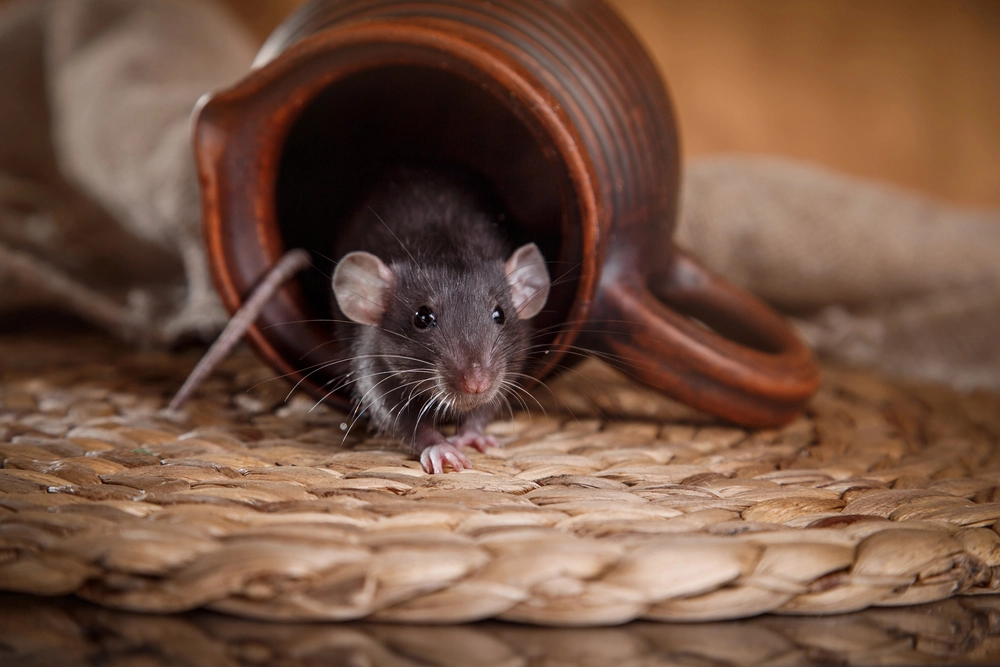
Rodents hide well. Most homeowners find the evidence before they ever see the animal. Check for these signs:
- Scratching or scurrying in walls, ceilings, or the attic at night.
- Dark, rice-shaped droppings along baseboards, in cabinets, or in the garage.
- Gnaw marks on wiring, food packaging, or wood trim.
- Greasy smudge marks where rodents run the same path each night.
- Shredded paper, insulation, or fabric pulled into a hidden corner.
- A musty ammonia smell in a closed room or pantry.
One mouse is rarely one mouse. For a closer look at what to watch for, read our guide to the 5 signs you have a rodent problem.

Mice vs. Rats: The Rodents That Invade Weatherford, TX
Rodents originally lived in the wild. Over time they adapted to our homes and businesses, where food and shelter are easy to find. Three species cause almost every call we take in Parker County. Each one behaves differently, so each one needs a different rat control or mouse control plan.
House Mice
The house mouse is the most common mouse control problem in Weatherford. Mice enter near the ground, often under a poorly sealed exterior door or garage door. They breed fast. A small problem in October becomes a large one by January.
Mice also stay close to home. Most nest within about 30 feet of their food source, which is why activity clusters in kitchens, pantries, and garages. Our post on getting rid of mice in your Weatherford home covers this in more detail.
Roof Rats
Texas A&M AgriLife Extension reports that roof rats are the most common rat found in Texas homes. They are strong climbers. They travel tree limbs, fence lines, and utility wires, then enter through gaps in the roof or soffit.
That changes the whole approach. If you hear noise above the ceiling at night, sealing the foundation will not solve it. The entry point is up high.
Norway Rats
Norway rats are heavier and stay near the ground. They burrow along foundations, under slabs, and beneath sheds or woodpiles. In Parker County we find them most often around barns, feed storage, and older outbuildings.
You can compare all three species in our pest library.
Health and Fire Hazards Rodents Bring Indoors
Rodents are not just a nuisance. The CDC links rats and mice to more than 35 diseases worldwide. In the United States that includes leptospirosis, rat-bite fever, salmonellosis, and lymphocytic choriomeningitis virus. Rural properties add another risk, since deer mice in fields and outbuildings can carry hantavirus.
You do not have to touch a rodent to be exposed. Droppings, urine, and nesting material contaminate food, counters, and stored goods.
Then there is the wiring. Rodent teeth grow continuously, so they gnaw constantly to file them down. Electrical cable is a common target. Stripped insulation inside a wall or attic creates a real fire risk, and it is a risk you cannot see until an inspection finds it.
Exclusion vs. Trapping: Which Rodent Control Method Works
Most people reach for traps first. Traps do one job well and one job only.
Trapping removes the rodents already inside. It gives you fast results and confirms what species you have. It does nothing about the opening they used to get in. Remove ten mice from a house with an open gap and more will follow the same scent trail.
Exclusion seals the entry points. This is the part that actually ends the problem. The CDC recommends sealing any opening one quarter inch or wider. Texas A&M AgriLife Extension puts it in coins: a mouse fits through a dime-size hole, a rat through a quarter-size hole.
Material choice matters just as much as finding the gap. AgriLife recommends closing vents and electric service entries with rodent-proof metal hardware cloth, metal flashing, or copper wool. Expanding foam alone fails, because rodents chew straight through it.
The openings we find most often on Weatherford homes include:
- Gaps under garage doors and worn exterior door sweeps.
- Foundation weep holes without mesh covers.
- Soffit and fascia gaps, plus damaged attic vents.
- Utility penetrations where pipes, wiring, and HVAC lines pass through the wall.
- Dryer vents with broken flapper covers.
Effective rodent control uses both methods together. We trap to clear the active population, then seal so the next wave cannot get in.
Preventing Rodents
A few habits make your property much less attractive to mice and rats:
- Seal cracks and gaps around doors, windows, and the foundation.
- Store food, pet food, and bird seed in sealed metal or heavy plastic containers.
- Clean up crumbs and spills right away.
- Remove clutter where rodents hide, such as stacked paper or cardboard.
- Trim tree limbs back at least four feet from the roofline to block roof rats.
- Keep firewood off the ground and well away from the house.
- Inspect for droppings and gnaw marks a few times a year.
These steps lower your risk. They do not reverse an active infestation. If you already see signs, act quickly before the population grows.
Why Fall Brings a Spike in Weatherford Rodent Activity
Rodents can invade any month of the year. Texas A&M AgriLife Extension notes that infestations happen most often in fall and winter, and that matches what we see across Parker County.
The trigger is simple. The first cool front sends mice and rats looking for warmth, and your walls are warmer than the field behind your fence. The best time to seal a house is before that front arrives, not after. Once rodents are inside, you are evicting them instead of keeping them out. We break the timing down in why fall is prime time for rodents.
Why Rodent Control Is a Challenge
Rodents are hard to spot until the infestation is serious. They hide in walls, attics, and crawl spaces, and they move mostly at night. They also reproduce quickly, so a small issue becomes a major one fast.
Store-bought solutions usually miss the root of the problem. They catch a few rodents and leave the entry points wide open, so the rodents come back.
Importance of Professional Rodent Control
Handling a rodent problem on your own is difficult and often does not work. Traps and retail poisons might catch a few animals. They will not close the gap that let them in, and they will not find the nest.
This is where professional rodent control in Weatherford comes in. At Pinnacle Pest Protection, we use safe and proven methods to remove rodents quickly. Our goal is to eliminate the rodents you see and stop the next infestation by finding where they nest and sealing off their entry points.
Call Now at 817-518-4192